OUR PRODUCTS
Uberr Clone AppGojek Clone AppSuper App DevelopmentUberr Eats Clone AppGrocery App DevelopmentHandyman App Like Uberr
inDriver Clone AppDelivery App DevelopmentGlovo Clone AppBolt Clone AppLyft Clone AppCareem Clone App
OUR PRODUCTS
← Back to Blog
Mobile App Development
July 6, 2026
Learn how to build a ride-hailing app like Uber in the USA in 2026. Explore essential app features, technology, development costs, legal requirements, revenue models, and a step-by-step launch strategy for creating a scalable transportation platform.
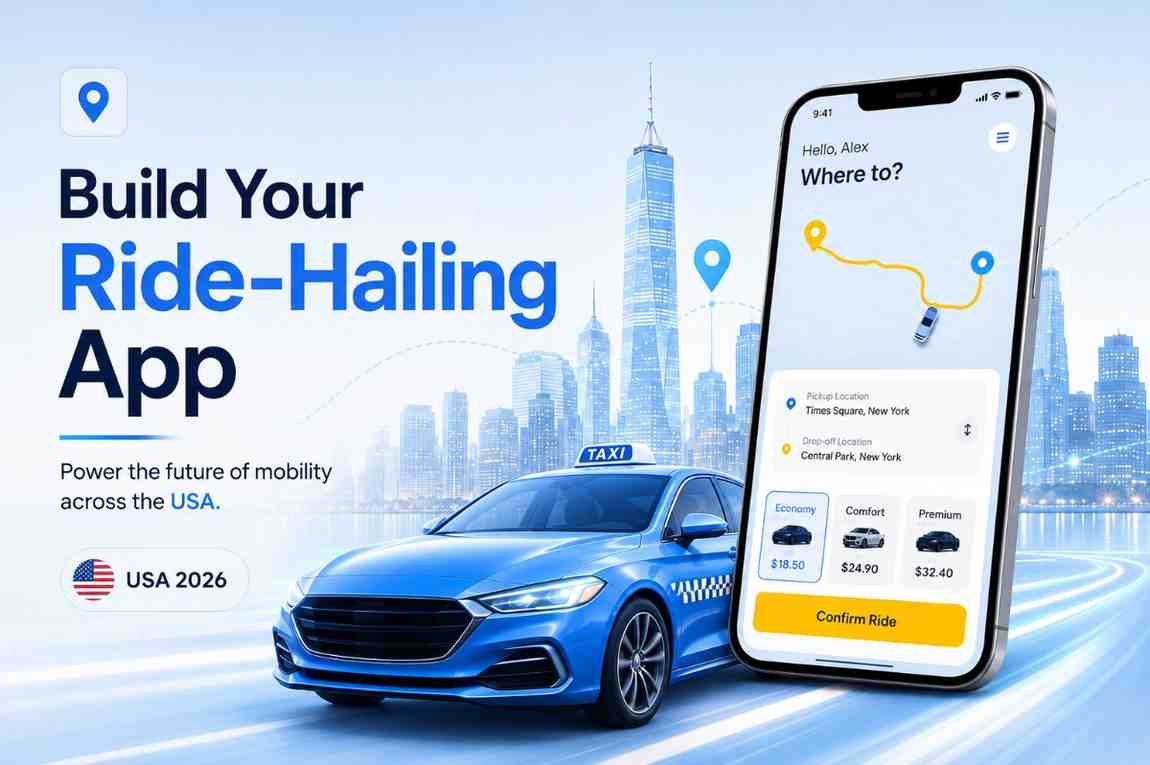
The ride-hailing industry has transformed how people travel across American cities. From daily office commutes and airport transfers to medical transportation and corporate travel, customers increasingly expect transportation to be available through a mobile app.
For entrepreneurs and transportation businesses, this creates an opportunity to invest in ride-hailing app development and build a platform designed for a specific city, audience, or transportation niche.
However, building a ride-hailing app like Uber in the USA requires more than copying basic booking features. The platform must manage riders, drivers, payments, live locations, pricing, insurance, safety, local regulations, and customer support within one connected system.
Uber reported approximately 3.6 billion global platform trips during the first quarter of 2026, representing 20% year-over-year growth. Lyft reported 945.5 million platform rides during 2025, an increase of 14% from the previous year. These figures represent global or platform-level activity rather than the size of the U.S. ride-hailing market alone, but they demonstrate continued demand for app-based transportation services.
Businesses planning to enter this market can either develop a completely custom platform or start with a customizable white-label Uber clone app.
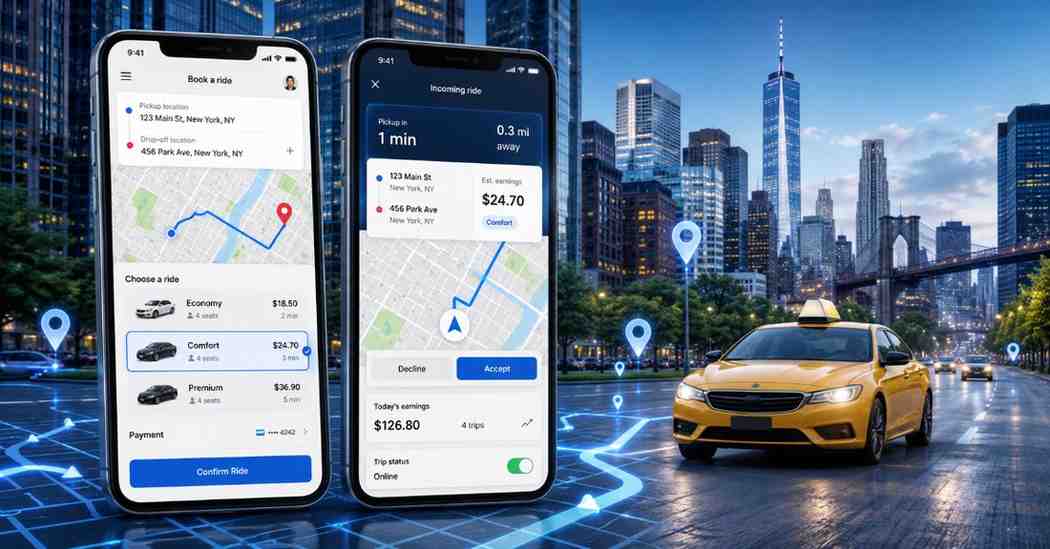
The U.S. ride-hailing market is competitive, but that does not mean every transportation need is already being served effectively.
A new platform should not attempt to compete with Uber or Lyft everywhere from the first day. A stronger strategy is to solve a specific local or industry problem.
Potential ride-hailing opportunities include:
The objective is not simply to build another taxi-booking app. The objective is to create a transportation platform with a clear reason for riders and drivers to use it.
Lyft reported 709 million rides in 2023, approximately 828 million rides in 2024, and 945.5 million rides in 2025. Its reported ride metric includes qualifying activity across its mobility platform, so the figures should not be presented as U.S.-only taxi rides.
Before starting development, decide who will provide the vehicles, how drivers will be paid, and how the platform will generate revenue.
A business may also earn through ride commissions, driver subscriptions, cancellation charges, corporate contracts, priority listings, advertising, and premium service categories.
A complete platform normally includes a rider app, driver app, administrator panel, and web-based dispatch panel.
Businesses can explore a more detailed list of Uber clone app features before finalizing the product scope.
Once the core booking experience is stable, the platform can introduce:
The minimum viable product should prioritize reliable booking, matching, navigation, payment, safety, and support before advanced automation is added.
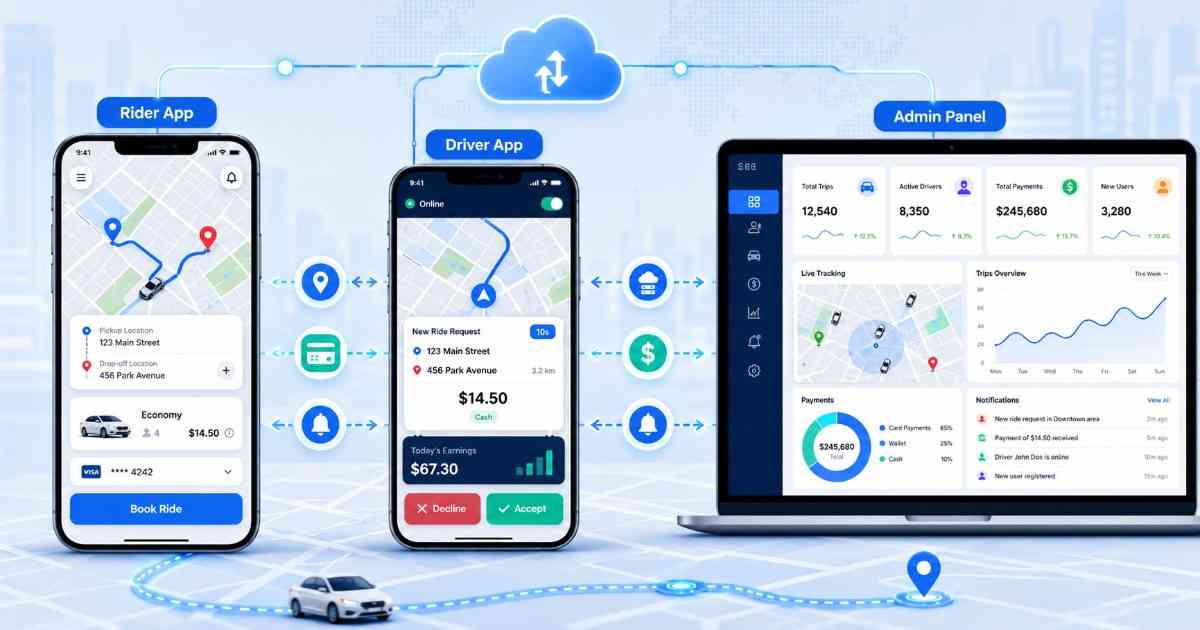
A ride-hailing application processes continuous location updates, ride requests, payment transactions, driver availability, and live communication.
A suitable technology architecture may include:
The technology stack should be selected according to expected ride volume, development budget, available technical resources, and integration requirements.
Businesses that require a fully managed approach can work with a specialized taxi app development company.
Ride-hailing regulations vary by state, city, airport authority, and transportation category. Therefore, a business should obtain qualified legal and insurance advice for every market it plans to enter.
Important compliance areas include:
Transportation Network Companies operating in California are regulated by the California Public Utilities Commission. The CPUC maintains requirements covering TNC permits, driver records, insurance, safety policies, accessibility, reporting, and other operational responsibilities. It also requires drivers to be able to provide proof of personal and commercial insurance following an accident.
New York City follows a separate Taxi and Limousine Commission licensing structure. For-hire trips must generally be arranged through an appropriately licensed base and completed by licensed drivers using licensed vehicles.
A High-Volume For-Hire Service category applies to businesses dispatching more than 10,000 trips per day. Applicants must provide information covering business operations, vehicle numbers, trip volumes, service areas, accessibility, traffic impact, driver deductions, and estimated driver earnings.
Ride-hailing platforms collect sensitive information such as live locations, saved addresses, identification documents, payment details, and trip histories.
Businesses subject to the California Consumer Privacy Act must provide relevant privacy notices and processes for consumer privacy requests. The law may give qualifying consumers rights related to accessing, correcting, deleting, and limiting certain uses of personal information.
Privacy controls, consent records, role-based access, data-retention rules, encryption, and account-deletion processes should therefore be included during development rather than added after launch.
The Uber clone app development cost depends on the development approach, app platforms, number of user roles, integrations, design, customization, infrastructure, and compliance requirements.
The following amounts are broad planning estimates rather than fixed quotations.
A white-label platform reduces development time because the core ride workflow, rider app, driver app, and administrative controls already exist.
Apporio states that a basic white-label configuration may be launched in as little as seven days, although additional integrations, regulatory work, custom features, and store approvals can extend the overall launch timeline.
Businesses requiring ownership and deeper technical control can also evaluate customizable Uber clone source code.
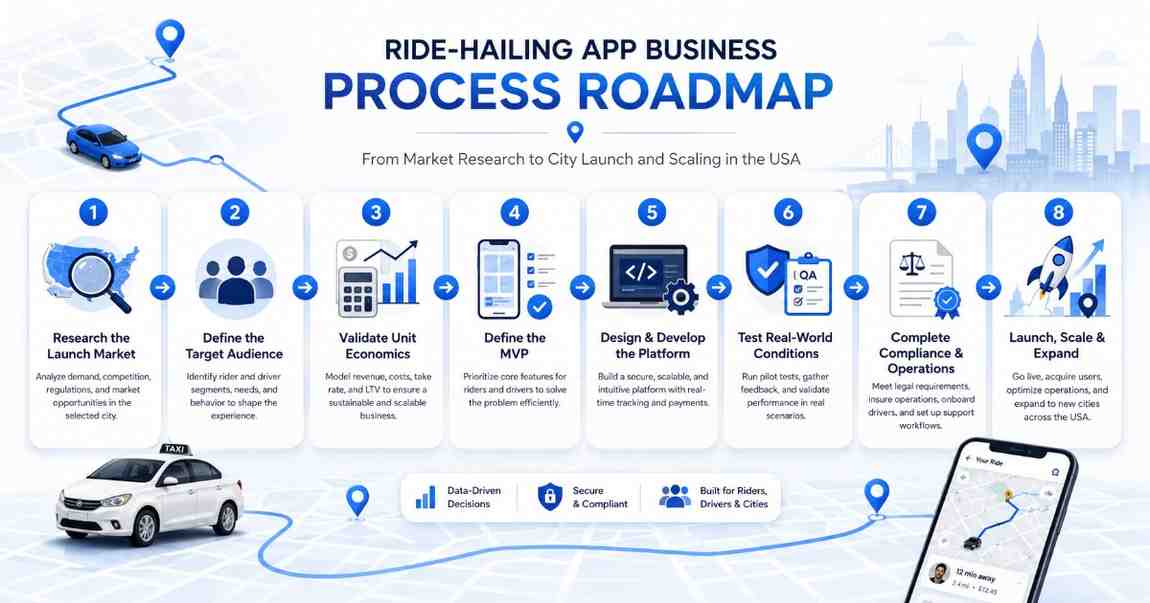
Select one city or service zone. Study population movement, local transportation gaps, airport demand, competitor pricing, driver availability, licensing, and insurance requirements.
Determine whether the app will serve daily commuters, corporate employees, tourists, senior citizens, patients, airport passengers, or premium riders.
Calculate the average fare, driver payout, commission, payment-processing cost, insurance, customer support, incentives, refunds, and marketing cost.
High ride volume does not automatically produce a profitable business.
Document the complete ride journey:
You should also define what happens when a driver cancels, a payment fails, GPS becomes inaccurate, or no driver is available.
Create the rider app, driver app, administrator dashboard, dispatch controls, backend system, APIs, payment integration, mapping integration, and notification workflows.
The platform should be tested under:
Secure the necessary licenses, insurance, driver-screening processes, customer-support system, airport permissions, and driver onboarding procedures.
Begin with a limited service zone and sufficient driver availability. Track booking completion, driver acceptance, cancellations, pickup times, support requests, repeat rides, and contribution margin.
Expand only after the first service area performs consistently.
Both approaches can work, but they solve different business needs.
Businesses should compare product ownership, source-code access, scalability, custom integrations, post-launch support, data ownership, and deployment responsibilities.
For a more detailed comparison, read Uber Clone vs. Custom Taxi App: Which Is Right for Your Business?.
A startup is unlikely to win simply by offering lower prices. A better strategy is to provide a service that is more useful for a defined market.
Strong differentiators may include:
Driver experience must receive as much attention as rider experience. Poor payouts, unclear deductions, slow support, and weak demand can cause drivers to leave, resulting in longer pickup times and more cancellations.
Apporio offers a white-label ride-hailing solution that includes rider applications, driver applications, and an administrative dashboard. Its platform supports real-time GPS tracking, dispatch management, payments, ratings, promotions, multiple transportation categories, and customizable branding.
The solution can be adapted for taxi services, ride sharing, medical transportation, rentals, delivery, corporate mobility, and other on-demand transportation models.
Businesses can begin by reviewing Apporio’s Uber clone app development solution and requesting access to a product demonstration.
Building a ride-hailing app like Uber in the USA in 2026 is not simply a mobile application project. It is the creation of a real-time transportation marketplace involving riders, drivers, payments, location technology, pricing, safety, insurance, and local regulation.
A successful launch begins with a focused market rather than nationwide expansion. Businesses should identify a specific transportation problem, validate the unit economics, build essential rider and driver features, complete the regulatory requirements, and launch within a controlled geographic area.
The strongest opportunity may not be to create another general-purpose Uber competitor. It may be to create a better solution for airport transportation, corporate mobility, medical rides, premium vehicles, accessible transportation, or underserved communities.
With the right technology foundation, driver network, compliance strategy, and local market positioning, a ride-hailing platform can develop into a scalable transportation business.
A custom single-city MVP may require an indicative budget of approximately $50,000 to $100,000, while a multi-city platform with advanced integrations can exceed $250,000. A white-label solution is generally priced according to branding, features, integrations, platforms, and customization requirements.
A custom MVP may take four to seven months, while a complex multi-city platform may require seven to twelve months or more. A ready-made white-label platform can be launched considerably faster, although customization and regulatory approvals affect the final timeline.
Yes. A business can build an application based on a similar marketplace model, but it should not copy protected branding, trademarks, proprietary code, copyrighted designs, or confidential technology. The product should have original branding and comply with applicable transportation, privacy, insurance, employment, accessibility, and payment regulations.
A typical platform includes a rider application, driver application, web-based admin panel, backend system, and dispatch panel. Larger businesses may also require fleet-owner, corporate, partner, support, and analytics panels.
The requirement depends on the state, city, operating model, and transportation category. Some jurisdictions regulate platforms as Transportation Network Companies, while others require local for-hire, taxi, fleet, airport, or business licenses.
Common revenue sources include ride commissions, booking fees, driver subscriptions, cancellation charges, corporate contracts, premium vehicle categories, advertising, fleet-management fees, and additional services such as delivery or rentals.


