OUR PRODUCTS
Uberr Clone AppGojek Clone AppSuper App DevelopmentUberr Eats Clone AppGrocery App DevelopmentHandyman App Like Uberr
inDriver Clone AppDelivery App DevelopmentGlovo Clone AppBolt Clone AppLyft Clone AppCareem Clone App
OUR PRODUCTS

← Back to Blog
August 31, 2026
A practical guide to digital wallet features, payment architecture, security controls, compliance, and implementation planning for multi-service super apps.
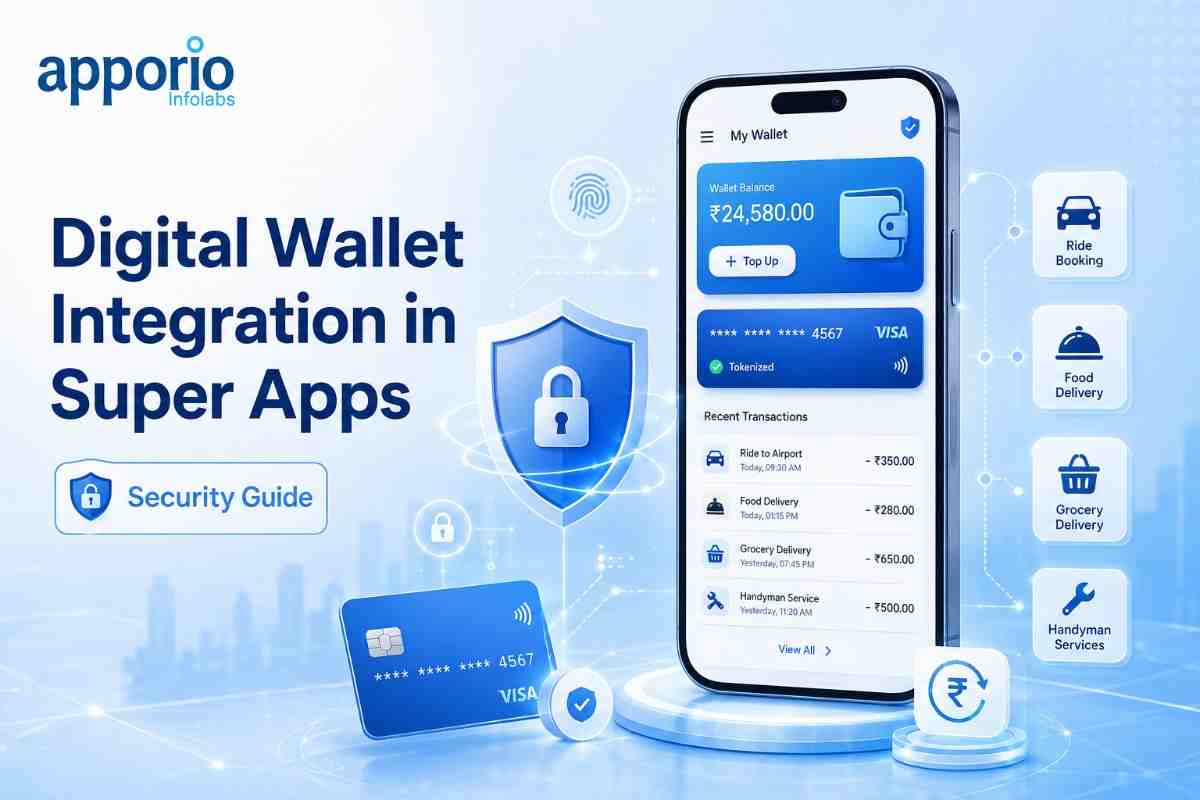
A digital wallet can become the financial layer connecting rides, food orders, grocery purchases, handyman bookings, subscriptions, refunds, and promotional credits inside one application. For a multi-service platform, super app wallet integration is not simply a stored-balance feature. It involves payment orchestration, identity verification, ledger design, fraud controls, regional payment methods, settlement workflows, and customer support processes.
The commercial decision is also broader than choosing a payment gateway. Founders must decide whether the wallet will support prepaid balances, cards, bank transfers, mobile money, refunds, merchant payouts, loyalty credits, or peer-to-peer transfers. Each function creates different technical, regulatory, and operational requirements.
This guide explains the wallet features that matter, how a secure implementation works, common mistakes to avoid, and how to evaluate an app development partner before building a multi-service platform.
Digital wallet integration connects an in-app balance and payment service to several independent services operating within one application. Users can add funds, pay for an order, receive a refund, apply credits, or view transaction history without entering payment details for every service.
The wallet normally sits between the app's service modules and external financial providers. A ride-booking module may request payment authorization, while a food delivery module may initiate a refund. Both modules communicate with the wallet or payment orchestration layer through controlled APIs. The wallet records the financial event and returns a clear result to the relevant service.
A reliable design separates the available balance, pending balance, reserved amount, and settled amount. This prevents the user interface from showing funds that have not actually cleared. It also supports partial refunds, failed payments, chargebacks, provider delays, and merchant settlement.
Multi-service applications create more transactions than a single-purpose app, but that activity can become fragmented when every service uses a different checkout process. A shared wallet gives the platform one place to manage payment preferences, transaction records, refunds, and risk checks.
For users, the main benefit is predictable payment behavior. They can select a preferred funding source, review charges in one history screen, and receive service-specific refunds without contacting separate providers. For operators, a unified payment layer makes it easier to reconcile revenue across transport, commerce, delivery, and home services.
The wallet also affects unit economics. A platform can reduce repeated payment entry, support prepaid campaigns, and design service bundles around a common balance. These outcomes depend on local payment coverage and customer adoption; they should be validated through market research rather than assumed.
Wallet functionality should be designed around actual transaction states, not only visual screens. A polished balance page cannot compensate for weak authorization, incomplete ledger controls, or unclear refund logic.
Apporio's payment gateway options can be assessed alongside the services and countries included in the launch plan. The correct setup depends on provider availability, settlement currency, business registration, and regulatory requirements.
Implementation should begin with financial and operational rules before development starts. A wallet added late in the project often creates rework across checkout, order management, refunds, admin dashboards, and reporting.
Apporio's super app development offering is relevant when the wallet must operate across several service modules rather than as an isolated checkout component.
Security is a continuous operating process. The team must protect the account, the payment method, the transaction request, the ledger, and the administrative tools. A weakness in any one of these areas can create financial loss or regulatory exposure.
Set alerts for abnormal top-up velocity, repeated failed payments, unusual device changes, rapid refunds, balance mismatches, and sudden changes in gateway response rates. Monitoring should cover both technical signals and business signals.
Apporio's cyber security services can support a review of authentication, API exposure, access control, data handling, and application risk. Security testing should be performed before production and repeated after major wallet changes.
Many wallet failures are caused by product decisions rather than coding errors. Teams often focus on the top-up screen while leaving settlement, refunds, support access, and market-specific payment behavior undefined.
The right model depends on the operator's regulatory position, launch markets, service mix, and desired payment experience. The following comparison helps frame the initial architecture discussion.
| Architecture Model | How It Works | Best Fit | Main Considerations |
|---|---|---|---|
| Payment-Token Wallet | Stores provider tokens and charges an external funding source when needed. | Platforms that want saved payment methods without holding customer funds. | Dependent on gateway availability, authorization rates, and provider fees. |
| Stored-Value Wallet | Users add funds that remain available for purchases inside the platform. | Platforms with frequent repeat transactions and strong wallet adoption. | May create licensing, safeguarding, reporting, and withdrawal obligations. |
| Hybrid Wallet | Combines wallet funds with cards, bank transfers, mobile money, and credits. | Global or multi-service platforms serving varied payment preferences. | Requires careful priority rules, reconciliation, currency handling, and failure management. |
| Service-Specific Payment | Each module manages its own payment flow and records. | Early validation where services operate independently. | Creates repeated checkout experiences and makes cross-service reporting harder. |
A hybrid model may offer the broadest product coverage, but it also demands stronger ledger governance and provider abstraction. A payment-token approach can reduce custody concerns, while a stored-value design may support prepaid campaigns and faster repeat checkout. These are architecture choices, not features to add without market and compliance review.
Digital wallets in multi-service platforms require more than a balance screen and a payment button. The implementation should cover transaction states, tokenized payment data, ledger integrity, refunds, settlement, provider callbacks, reconciliation, access control, and market-specific compliance.
For founders planning a broader service ecosystem, Apporio can support the product through Gojekk Clone, Super App Development, Cyber Security, and payment gateway integration. A staged release can begin with a defined set of services and payment methods, then expand after transaction data and operational feedback are available.
When the wallet architecture is planned alongside the service modules, administration tools, and financial workflows, the platform is easier to operate and safer to scale. For a technical and commercial review of your idea, Book Free Demo.
A wallet provides a shared payment and balance layer for services such as rides, food delivery, grocery delivery, and handyman bookings. It can manage top-ups, payment tokens, refunds, credits, transaction history, and selected settlement workflows from one system.
Usually, the application should avoid storing raw card numbers and security codes. A payment provider can tokenize sensitive payment details and return a reference that the platform uses for future transactions. The final approach depends on provider capabilities and applicable compliance requirements.
Important controls include encryption, tokenization, strong authentication, device and risk checks, transaction limits, webhook verification, idempotency keys, role-based administration, audit logs, secret management, and continuous monitoring for unusual activity.
Yes. A shared wallet can support multiple service modules when each transaction includes a clear service reference and follows common ledger, authorization, refund, and reconciliation rules. The services should access the wallet through controlled APIs rather than changing balances directly.
A stored-value wallet holds funds that users preload and spend inside the platform. A payment-token wallet stores references to external payment methods and charges those methods when a transaction occurs. The stored-value model can create additional regulatory and accounting responsibilities.
Testing should include provider timeouts, duplicate callbacks, delayed confirmations, insufficient funds, partial refunds, cancelled orders, reversals, currency mismatches, and users closing the app during checkout. The server and provider confirmation should determine final payment status.

