OUR PRODUCTS
Uberr Clone AppGojek Clone AppSuper App DevelopmentUberr Eats Clone AppGrocery App DevelopmentHandyman App Like Uberr
inDriver Clone AppDelivery App DevelopmentGlovo Clone AppBolt Clone AppLyft Clone AppCareem Clone App
OUR PRODUCTS

← Back to Blog
August 24, 2026
A practical guide to grocery product substitutions, covering approval rules, inventory logic, picker workflows, refunds, customer experience, and operational controls.
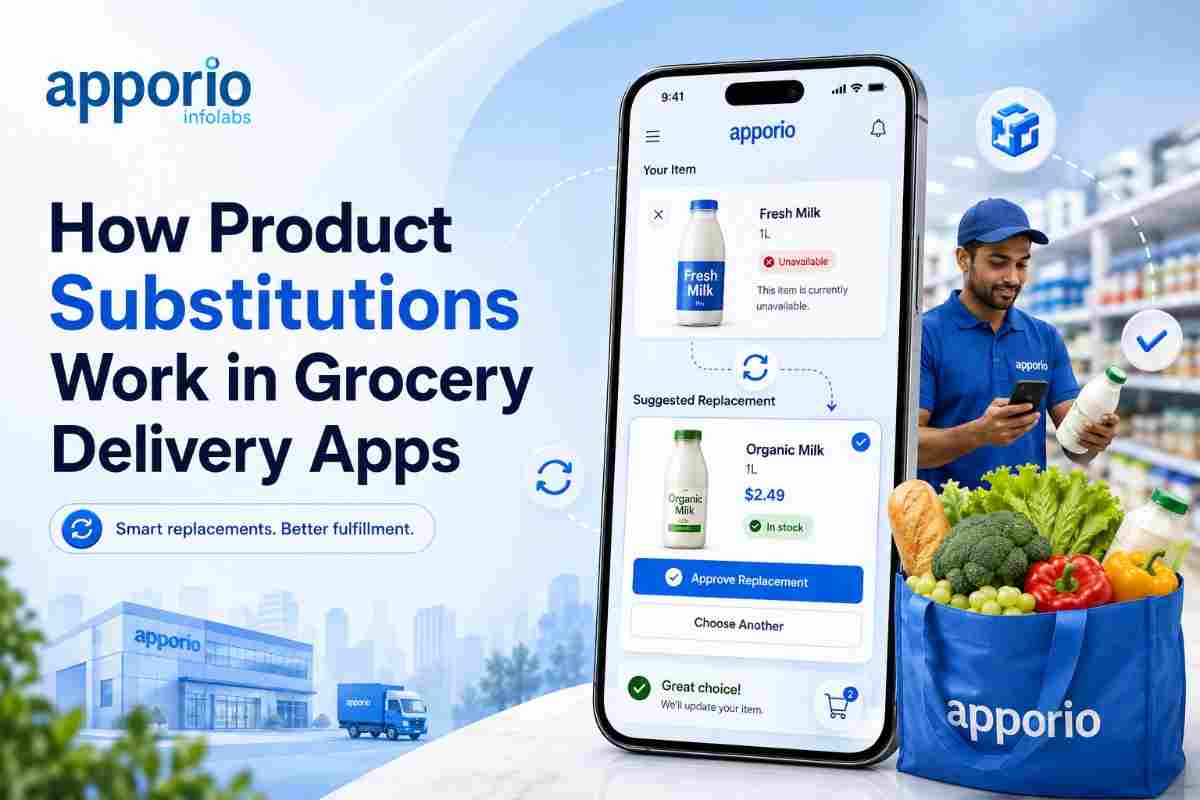
A missing item can turn a carefully planned grocery order into a support ticket, refund, or abandoned app session. The grocery app product substitution feature addresses this problem by giving the platform a structured way to replace unavailable products with acceptable alternatives.
Substitution is not simply a matter of showing a similar item. The app must connect catalog data, real-time inventory, shopper decisions, customer preferences, pricing rules, payment handling, and delivery operations. If any part of this chain is unclear, the customer may receive an unwanted product or pay an unexpected amount.
This guide explains how the workflow operates from checkout to delivery. It also covers the business rules operators should define before launch, the app screens required for customers and pickers, and the mistakes that commonly create avoidable complaints.
For businesses planning a wider grocery marketplace, this capability should be considered alongside the Uber for Grocery Delivery App model, which typically includes customer ordering, store management, picker coordination, and delivery tracking in one operating system.
A product substitution workflow is the set of app rules used when an ordered grocery item is unavailable. Instead of automatically removing the item, the platform can recommend a replacement, ask the customer for approval, allow the picker to choose within defined limits, or issue a refund.
The process normally begins with an inventory check. At checkout, the product may appear available, but stock can change before a store employee starts picking the order. The platform therefore needs a second availability check during fulfillment. If the item cannot be found, the picker records the shortage and starts the replacement process.
The important point is that substitution must be explicit. Customers should know whether they are approving a specific product, accepting a category rule, or allowing the picker to make a judgment call.
Grocery orders contain products that customers often need for a particular meal, routine, or household requirement. A replacement can preserve the value of an order, but an unsuitable replacement can be worse than a missing item. A customer who orders lactose-free milk, infant formula, a particular medicine-adjacent wellness product, or a religiously compliant food may reject an alternative that looks similar in a basic catalog.
Substitutions also affect the economics of fulfillment. A picker who cannot resolve stock problems quickly may spend more time on one order, delay the delivery, or contact support. A clear workflow gives the picker a defined decision path and reduces repeated phone calls.
These benefits depend on accurate inventory data and sensible rules. A substitution feature cannot compensate for a catalog that regularly shows unavailable items as ready to order.
A well-designed replacement system supports three groups at the same time: the customer placing the order, the store or picker fulfilling it, and the operator managing the marketplace. Each group needs different information and controls.
Customers gain control over what enters their basket. They can select a preferred replacement, reject substitutions, or set instructions such as “same brand only,” “smaller size is acceptable,” or “do not replace.” These choices are especially useful for recurring orders and products with dietary, medical, cultural, or quality requirements.
Clear pricing is equally important. If the replacement costs more, the customer should see the difference before approval where possible. If it costs less, the app should explain how the refund or adjustment will be handled. A transparent message is more useful than a generic notification that an item was changed.
Pickers need fast access to replacement suggestions while moving through the store. The screen should show the original item, the reason it cannot be fulfilled, the customer’s instructions, and eligible alternatives. A picker should not have to search the entire catalog or guess whether a price difference is allowed.
Store teams can also use substitution data to improve shelf availability. If a product repeatedly requires replacement, managers can review purchase orders, inventory synchronization, and store-level replenishment.
Operators receive data that can improve merchandising and service quality. Useful metrics include substitution acceptance rate, rejection rate, refund value, picker response time, and substitution frequency by store or category.
These metrics should be segmented. A high replacement rate for fresh produce may have a different cause from a high rate for packaged goods. One may reflect quality preferences; the other may indicate poor inventory feeds.
The workflow should be designed as a connected sequence rather than as an isolated customer setting. The following steps describe a practical operating model.
A customer orders a 1-litre bottle of a specific brand of olive oil and allows replacements up to a small price difference. The picker finds the original item unavailable. The app recommends another 1-litre bottle in the same category, displays the price difference, and sends a request. If approved, the replacement is added. If rejected, the item is removed and its value is refunded according to the payment policy.
This example shows why the workflow needs both product attributes and financial rules. A replacement is not complete until the catalog, order, payment, and receipt all show the same final state.
A single order-level setting is often too broad. Customers may accept a different brand of rice but refuse a different brand of baby food. Give them item-level options during cart review, with a sensible default that can be changed before checkout.
Recommendations depend on data such as category, size, unit, brand, dietary label, flavor, pack count, and storage type. A product name alone is not enough. For example, “milk” could refer to dairy, plant-based, powdered, flavored, or lactose-free products.
Display the original price, replacement price, and difference. If the final charge is not known until picking, explain the authorization and refund process in plain language. Avoid presenting an alternative without making the financial effect visible.
Pickers work under time pressure. Provide a short list of eligible alternatives, barcode or catalog search, customer notes, and a clear action for unavailable items. The workflow should continue if the store has weak connectivity, then synchronize when the connection returns.
Some categories need stricter controls. Infant products, allergy-sensitive goods, dietary products, personal care items, and regulated products may require exact-item approval or no substitution by default. Rules should be configurable by category and market.
Payment handling is a core part of this feature. Decide whether the app uses an authorization and later capture, an initial charge followed by a refund, or another supported flow. The policy must account for taxes, coupons, minimum basket thresholds, and partial fulfillment. Apporio’s payment gateway options can be evaluated alongside these business rules.
Store the original product, proposed replacement, customer response, picker identity, timestamp, final price, and refund status. This audit trail helps support teams resolve disputes and lets operators measure performance by store, category, and fulfillment team.
Test more than the successful approval path. Include simultaneous stock changes, duplicate substitutions, expired payment authorizations, customer non-response, split orders, failed notifications, offline picker sessions, and refunds that take longer to appear. These cases expose weaknesses before they affect live customers.
Another common mistake is treating replacement data as a one-time transaction record. It should feed back into catalog management, purchasing, store performance, and customer experience analysis.
There is no single best policy for every grocery business. The right approach depends on product sensitivity, picker capacity, inventory accuracy, and the level of control customers expect.
| Approach | Customer Control | Picker Workload | Best Use Case | Main Risk |
|---|---|---|---|---|
| Exact replacement selected in advance | High | Low | Frequently purchased packaged goods | The selected alternative may also be out of stock |
| Approval before replacement | Very High | Medium | Premium, dietary, or sensitive products | Delivery delays when responses are slow |
| Picker chooses within rules | Medium | Low to Medium | Fresh produce and common household items | Quality judgments may vary by picker |
| Automatic category replacement | Low to Medium | Low | High-volume, low-sensitivity products | Customers may receive an unsuitable item |
| No replacement with refund | High | Low | Restricted or highly preference-based goods | Lower basket value and possible dissatisfaction |
Many operators use a hybrid model. Customers select exact alternatives for sensitive goods, approve replacements for higher-value products, and permit picker decisions for routine items. The app can apply these policies by category, store, market, and customer preference.
Businesses can also start with a smaller policy set and expand after reviewing real order data. A controlled first version is easier to monitor than a complex rules engine with unclear outcomes.
Product replacement affects the entire grocery delivery journey, including catalog accuracy, customer trust, picker productivity, payment processing, refunds, and operational reporting. The strongest implementations make customer preferences explicit, rank alternatives using reliable product data, and give fulfillment teams a fast decision path.
For businesses planning this capability, Apporio Infolabs can support the wider platform through Uber for Grocery Delivery App, Grocery Delivery, and on-demand app development. These options can be assessed against your store model, target markets, payment setup, inventory process, and rollout plan.
The grocery app product substitution feature should be treated as a core fulfillment workflow rather than a minor checkout setting. Book Free Demo
The app follows the customer’s selected rule. It may recommend an alternative, request approval, allow the picker to choose within defined limits, or remove the item and issue a refund.
Yes. A customer can reject a proposed product when the workflow includes approval controls. The app should then follow the configured fallback, such as removing the item and refunding its value.
The system compares the original and replacement prices, updates the order total, applies relevant taxes or discounts, and processes an additional charge or refund according to the payment policy.
No. Sensitive products may require an exact replacement, customer approval, or no replacement. Category-level rules help operators apply stricter controls where an unsuitable alternative could create a serious customer problem.
Pickers should see the original product, customer instructions, eligible alternatives, price limits, approval status, and the action required if no suitable product is available.
Useful metrics include substitution frequency, acceptance and rejection rates, refund value, picker response time, unavailable-item rate, and performance by store, category, and market.

