OUR PRODUCTS
Uberr Clone AppGojek Clone AppSuper App DevelopmentUberr Eats Clone AppGrocery App DevelopmentHandyman App Like Uberr
inDriver Clone AppDelivery App DevelopmentGlovo Clone AppBolt Clone AppLyft Clone AppCareem Clone App
OUR PRODUCTS

← Back to Blog
August 24, 2026
A practical guide to the features, workflows, and operational decisions behind grocery apps built for recurring orders and subscription-based delivery.
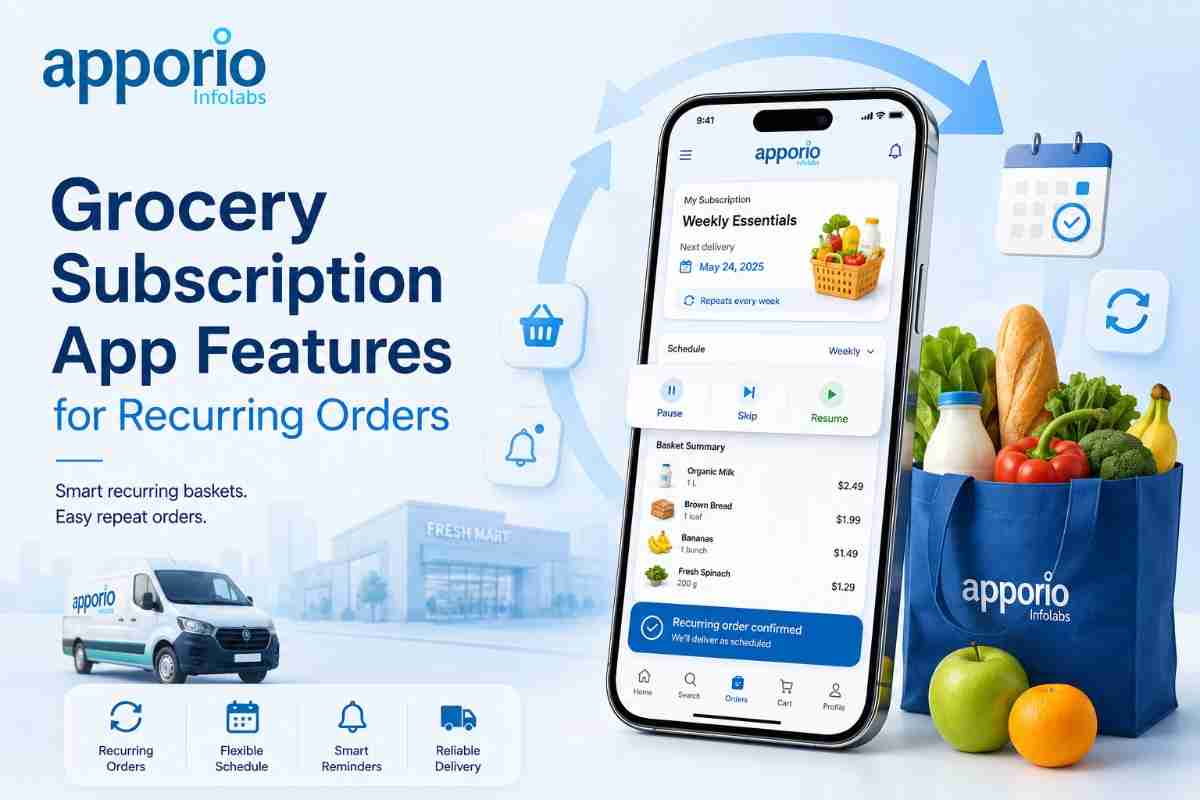
Recurring grocery orders can create a more predictable purchasing routine for customers and a more structured demand pattern for operators. But the product is not simply a standard grocery marketplace with a repeat-order button. The platform must manage schedules, inventory changes, payment retries, delivery capacity, substitutions, cancellations, and customer communication over time. These requirements make grocery subscription app development a product and operations project, not only a mobile interface exercise.
This guide explains the core capabilities needed for a subscription-led grocery service. It is intended for founders, retailers, delivery operators, and established businesses comparing a white-label product with a fully custom build. The focus is on recurring orders, customer control, fulfilment accuracy, and the administrative tools required to run the model across different markets.
A practical starting point is to define the products that customers buy repeatedly. Household staples, fresh produce boxes, baby supplies, pet food, office pantry items, and prepared meal ingredients may all support recurring demand, but each category has different stock, freshness, and delivery requirements.
A grocery subscription app lets customers create scheduled orders that repeat at a chosen frequency. The schedule may be weekly, fortnightly, monthly, or based on a custom interval. Customers usually select products, quantities, a delivery address, a preferred time window, and a payment method. The system then creates future orders according to those rules.
The app normally includes three connected environments:
The recurring workflow needs a clear distinction between a subscription plan and an individual fulfilment order. A plan contains the customer's long-term preferences. Each generated order represents one actual delivery, with its own stock status, final total, delivery slot, and payment result.
For businesses that need a broader logistics foundation, an Uber for Grocery Delivery App can provide a useful reference point for customer, store, and courier workflows. Subscription capabilities still need to be evaluated against the operator's catalogue, payment rules, and delivery model.
Subscription ordering changes the timing and predictability of grocery demand. With one-off purchases, the operator reacts to orders as they arrive. With recurring baskets, part of the future workload is known in advance, although it is not guaranteed because customers can pause, edit, cancel, or fail to complete payment.
This visibility can support better planning when it is connected to reliable operational data. The business can review upcoming order volume, identify frequently repeated items, allocate delivery capacity, and prepare inventory purchasing decisions. It can also identify where a subscription is not performing because of repeated substitutions, failed payments, late deliveries, or frequent skips.
The model matters to customers for a different reason: it reduces the effort of remembering routine purchases. A customer may want the same water, rice, cleaning products, breakfast items, or pet supplies every month without rebuilding the basket each time. The value depends on control. If customers cannot change the quantity, skip a week, select another delivery window, or reject a substitute, the recurring experience quickly becomes frustrating.
Commercial evaluation should therefore examine more than app screens. Ask how the system handles inventory variation, delivery cut-off times, card expiry, partial fulfilment, refunds, and regional payment practices. These operational details determine whether the subscription model can work beyond a small pilot.
A well-designed recurring grocery service benefits customers, merchants, and delivery teams, but each group needs different controls. The following capabilities form the practical feature set for an initial product and provide a basis for comparing vendors.
Customers should be able to choose a delivery frequency, start date, delivery window, and subscription duration. Some businesses may offer open-ended plans, while others may sell fixed-term boxes or prepaid bundles. The interface should show the next billing date and next delivery date separately when those events do not occur together.
Customers need to add, remove, or replace products without cancelling the entire plan. Quantity controls are important for household changes, seasonal demand, and temporary visitors. A useful design shows the saved basket, the next order, and the date by which edits must be completed.
These controls should be visible rather than hidden behind support requests. A pause may apply for a selected period, while a skip usually affects one scheduled order. The system should explain the effect on payment, delivery, discounts, and any minimum commitment before the customer confirms an action.
Operators can configure recurring-order discounts, membership benefits, delivery fees, minimum basket values, or product-specific offers. Pricing rules must be transparent because the basket total may change when product prices, taxes, delivery charges, or weights change. The checkout summary should identify the estimated total and any conditions that can alter the final charge.
The platform should distinguish between products that are suitable for recurring orders and items that frequently become unavailable. Merchants may choose to block unavailable products, suggest alternatives, or let the customer define a substitution preference. Fresh and weighted goods require additional handling because the final amount may differ from the estimate.
Recurring orders should not automatically assume unlimited delivery capacity. The scheduling engine needs to check service areas, store preparation capacity, courier availability, holidays, and local cut-off rules. If a selected slot becomes unavailable, the customer should receive alternative options before the order is confirmed.
Recurring billing requires a saved payment method or another authorised payment arrangement. The platform should handle expired cards, declined transactions, insufficient funds, and changed payment details. Retry attempts must be logged, communicated clearly, and connected to an order status so the store does not prepare an unpaid order without a defined business rule.
Because payment practices differ across regions, an operator should review supported providers through Apporio's Payment Gateways resource before selecting the technical approach. The checkout experience should also support local currency, tax treatment, receipts, and refund workflows where applicable.
Customers should receive reminders before the edit cut-off, payment attempt, picking stage, dispatch, and delivery. Notifications need meaningful actions, such as changing the basket or updating a payment method, instead of sending generic alerts. Email, push, SMS, or in-app messages can be selected according to market and consent requirements.
A customer account should show active plans, completed deliveries, skipped dates, refunds, failed payments, and invoice or receipt details. This record reduces support volume and helps customers understand what happened when a recurring order was changed or partially fulfilled.
Subscription features should be planned around a defined operating model. Building the screens first often creates expensive gaps in billing, fulfilment, and customer support. Use the following sequence to frame the product before development begins.
For businesses combining subscriptions with broader delivery operations, Delivery App Development can help frame the courier, dispatch, tracking, and order-management components that sit around the recurring basket.
The strongest subscription products make routine ordering easy while keeping unusual events visible. The following practices reflect the operational issues that typically affect retention and support workload.
Every active plan should show the next delivery date, order contents, estimated total, delivery window, and edit deadline in one place. Customers should not need to inspect several screens to find out what will be delivered or when payment will be attempted.
Packaged products may have stable prices, but weighted goods, promotions, taxes, and substitutions can change the final amount. Display an estimate during planning and a final total after picking. If the difference exceeds a defined threshold, ask for customer approval or apply a stated refund rule.
Substitution is unavoidable in many grocery categories. Let customers choose options such as “same brand,” “similar product,” “lower price only,” or “refund if unavailable.” These choices should be stored at product or subscription level and visible to fulfilment staff.
A global product may serve markets with different time zones, working days, holidays, and delivery patterns. Calculate edit deadlines using the customer's location and the store's operating calendar. Avoid showing a generic cut-off that does not match the actual fulfilment process.
An active subscription can have one failed delivery, one skipped date, or one refunded order without being cancelled. Separate statuses such as active, paused, skipped, payment pending, fulfilled, partially fulfilled, and cancelled. This gives support teams a precise view of the problem.
Revenue alone does not show whether recurring orders are healthy. Track subscription activation, skip rate, cancellation reasons, payment recovery, substitution rate, fulfilment accuracy, late deliveries, average basket value, refund value, and support contacts per recurring order.
Use established payment-provider flows instead of storing sensitive card details directly in the application. Apply role-based access to customer records, audit administrative actions, and define retention rules for personal data. A review of Cyber Security considerations should be part of vendor selection and launch planning.
Some customers, store workers, or couriers may operate with unreliable connectivity. The application should provide clear loading states, retry behaviour, and safe handling for interrupted updates. Store and delivery workflows should not create duplicate orders when a user taps a button more than once or reconnects after a network failure.
Many subscription projects appear simple during early discovery because the recurring basket is easy to demonstrate. The risk appears when the system meets changing inventory, payment failures, and real delivery constraints. Avoid these common mistakes.
There is no single recurring-order model that fits every grocery business. The right choice depends on assortment, inventory stability, delivery frequency, and customer expectations.
| Model | How It Works | Best Fit | Main Operational Risk |
|---|---|---|---|
| Recurring basket | Customers select products and repeat them on a chosen schedule. | Staples and household replenishment. | Stock changes and substitutions. |
| Curated subscription box | The business assembles a predefined box for each delivery cycle. | Produce boxes, meal ingredients, and themed assortments. | Customers may dislike changes in contents. |
| Membership plan | Customers pay for benefits such as delivery discounts or member pricing. | Businesses with frequent one-off orders. | Benefits may exceed the value generated by usage. |
| Prepaid delivery bundle | Customers purchase a set number of future deliveries or baskets. | Predictable, fixed-term campaigns. | Unused credits and refund management. |
A recurring basket usually offers the greatest customer control, but it also requires the most detailed handling of inventory and price variation. A curated box simplifies picking but needs strong communication about changing contents. A membership plan is closer to a loyalty product, while a prepaid bundle creates an accounting and credit-tracking requirement.
Grocery subscription app development should begin with the recurring order lifecycle rather than a list of attractive interface features. The product must connect basket management, payment processing, inventory decisions, substitutions, delivery scheduling, notifications, and support operations. A smaller launch with dependable recurring fulfilment is usually easier to assess than a broad catalogue with unclear exception handling.
Apporio Infolabs can support businesses evaluating a grocery platform through the Uber for Grocery Delivery App, Delivery App Development, and wider on-demand mobile app development services. These options can be assessed against your target market, delivery model, payment requirements, and subscription rules before selecting an implementation path.
Book Free Demo
A grocery subscription app allows customers to create scheduled orders that repeat at a selected frequency. It normally includes customer controls for basket edits, skips, pauses, payment methods, delivery windows, and subscription cancellation.
Essential capabilities include flexible delivery schedules, recurring basket management, pause and skip controls, inventory-aware product selection, substitution preferences, payment retry handling, delivery slot management, notifications, order history, and an admin dashboard.
The platform should allow customers to define substitution preferences, such as accepting a similar product, accepting a lower-priced option, or receiving a refund. Store staff should see these rules while picking, and the final order should record the replacement or refund.
Yes. Customers should be able to edit quantities, replace products, skip an upcoming delivery, pause the plan for a selected period, resume it, or cancel it. The app should show the relevant cut-off date and explain the effect on billing and delivery.
The system can notify the customer, retry the payment according to a defined schedule, hold the order, or cancel that delivery based on the business rules. Payment status and order status should remain visible to both the customer and the operations team.
A recurring basket suits customers who want control over individual products. A curated box is easier to prepare when the business controls the assortment, but it requires clear communication about changing contents. The choice depends on inventory, product category, and customer expectations.

