OUR PRODUCTS
Uberr Clone AppGojek Clone AppSuper App DevelopmentUberr Eats Clone AppGrocery App DevelopmentHandyman App Like Uberr
inDriver Clone AppDelivery App DevelopmentGlovo Clone AppBolt Clone AppLyft Clone AppCareem Clone App
OUR PRODUCTS

← Back to Blog
October 16, 2026
A practical guide to planning and launching a corporate mobility platform for Nigerian companies, with features for employee transport, fleet control, payments, and reporting.
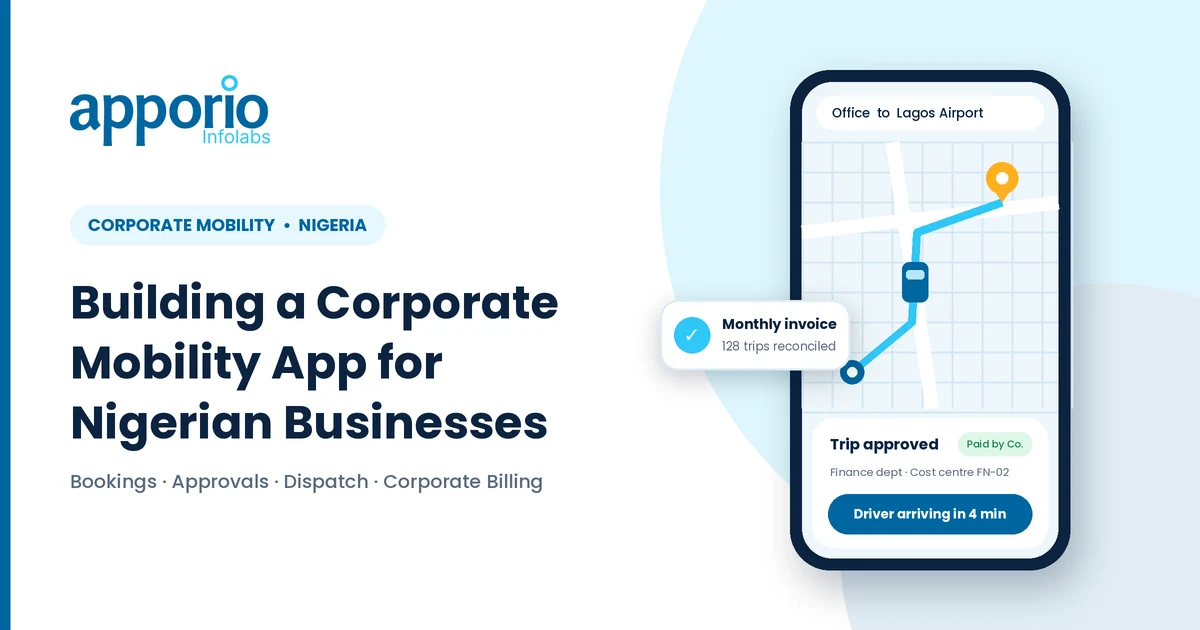
Businesses in Nigeria often coordinate staff transport, airport pickups, client visits, fieldwork, and scheduled trips through phone calls, spreadsheets, messaging apps, or informal driver networks. These methods can work at a small scale, but they make it difficult to track bookings, control transport spend, confirm completed rides, and respond quickly when plans change.
A corporate ride service platform in Nigeria gives companies a structured way to manage business travel from one system. Employees can request or schedule rides, transport managers can approve trips, drivers can receive assignments, and finance teams can review invoices and usage records.
The product should not be treated as a consumer taxi app with a company logo. Corporate mobility has different requirements: user permissions, travel policies, account billing, scheduled rides, driver verification, service-level monitoring, and business reporting. This guide explains how to plan the product, choose the right operating model, and avoid common development mistakes in the Nigerian market.
A corporate mobility app is a digital transport management system built for companies rather than individual passengers. It connects employees, administrators, drivers, fleet operators, and finance teams through role-specific interfaces.
An employee may use the passenger app to request an office commute, schedule an airport transfer, or book transport for a customer meeting. A manager may approve selected trips, set travel rules, and monitor active bookings. The transport team may assign drivers, manage vehicle availability, and handle changes from an operations dashboard.
The platform can support different fulfilment models:
Core components normally include a passenger application, driver application, administration panel, booking engine, payment or invoicing workflow, notifications, and reporting. Apporio's taxi app development services can provide a starting point for the dispatch and booking layer, while corporate rules and Nigerian operating needs are added during product planning.
Transport is an operational issue, not only an employee benefit. Delayed pickups can affect meetings, shift changes, customer visits, and field productivity. When trips are arranged manually, companies may not know the actual cost of each journey or whether a booking was completed according to policy.
Nigeria also has a varied transport environment. Businesses may operate across Lagos, Abuja, Port Harcourt, Ibadan, Kano, or several cities with different traffic patterns, coverage levels, driver supply, and route conditions. A mobility product must allow the business to configure service areas instead of assuming that one operating model fits every location.
A structured app helps decision-makers answer practical questions:
It also creates an auditable record. That record is useful when finance teams reconcile invoices, HR teams review transport allowances, or operations managers investigate a missed pickup. The app does not remove traffic, driver shortages, or route uncertainty, but it gives the company better information and a repeatable process for handling them.
Employees and approved coordinators can request trips through one channel instead of relying on separate calls and messages. Each booking can include the passenger, pickup point, destination, timing, department, purpose, and approval status.
Companies can associate rides with departments, projects, cost centres, or employee accounts. This makes it easier to compare planned and completed trips and identify repeated routes that may be suitable for contracted transport or scheduled shuttles.
Operations staff can view pending, assigned, active, completed, cancelled, and disputed trips from an administrative interface. If a driver becomes unavailable, the dispatcher can reassign the booking rather than starting the process again from the beginning. Dedicated taxi dispatch software gives the transport team a single panel for these exceptions.
Passengers can receive booking confirmations, driver details, estimated arrival information, and trip updates on their phones. Scheduled bookings are particularly useful for early-morning shifts, airport journeys, and planned customer visits.
Driver profiles, vehicle records, trip histories, and user permissions help create a clearer operating trail. Companies can also define which staff members are allowed to request executive trips, approve bookings, or access financial reports.
A mobility platform can later connect with employee transport, delivery, concierge, or other on-demand workflows if the business case supports expansion. Apporio's super app development offering is relevant when a company intends to place multiple service categories inside one broader platform, rather than building a single-purpose product.
Start with one clear problem. It may be staff transportation for a large employer, airport transfers for corporate travellers, transport for field teams, or ride booking for visitors and clients. A narrow first use case makes it easier to define workflows, users, service areas, and success measures.
List the actions required by employees, transport coordinators, approvers, drivers, fleet managers, finance teams, and platform administrators. Each role should receive only the permissions it needs. For example, a department manager may approve a trip but should not edit driver documents or change platform-wide pricing.
Decide whether rides are immediate, scheduled, recurring, or approval-based. Define what happens when an approver rejects a request, a passenger changes the destination, a driver arrives late, or no vehicle is available. These exception paths often determine the product's real operational value.
Corporate customers may prefer monthly invoicing, prepaid balances, card payments, bank transfers, or a combination of methods. The product should separate passenger booking from account settlement when the company pays centrally. Apporio's payment gateways page can help inform the integration discussion, but the final payment setup should be checked against the company's banking, reconciliation, and compliance requirements.
Capture driver identity details, vehicle information, service status, assigned areas, and availability. If external providers are involved, define document review, onboarding, contract terms, and incident escalation before inviting them onto the platform.
The initial release should focus on booking, approval, dispatch, trip status, notifications, user management, and reporting. Advanced automation can follow after the company has observed actual booking behaviour. Apporio's Apporio Taxi Uber Clone Script may serve as a foundation for common ride-booking functions, subject to the required corporate customisation and market configuration.
A controlled pilot can reveal practical issues such as inaccurate pickup points, poor driver availability at shift changes, approval delays, and unclear invoice data. Test real operational scenarios before expanding to more departments or cities.
Use pickup instructions that work in real environments, including office gates, estates, malls, hotels, airports, and large campuses. A map pin alone may not identify the correct entrance. Allow passengers or coordinators to add landmarks, gate names, building details, and driver notes.
Many business journeys are predictable. Staff shifts, airport transfers, weekly site visits, and recurring client appointments should be bookable in advance. The operations team also needs visibility into future demand so it can plan drivers and vehicles before the pickup window.
Do not hard-code every travel rule into the application. Different organisations may require manager approval, spending limits, approved service zones, restricted hours, or executive booking permissions. Configurable policies reduce rework when the platform is introduced to a second corporate client.
Drivers and passengers may experience inconsistent network conditions. The app should handle delayed status updates, retry important requests, and present a clear current state when data synchronisation is interrupted. The operations team should also have a fallback process for urgent trips during outages.
Corporate transport records can contain employee names, phone numbers, locations, schedules, and billing data. Use role-based access, secure authentication, controlled data visibility, audit logs, and sensible retention practices. Apporio's cyber security service is relevant during threat modelling, access review, testing, and security planning.
A report should answer a business question, not simply export every database field. Include trip date, passenger, department, route, status, driver, fare or invoice value, approval record, and exception details where relevant. Reports should support filtering by cost centre, location, service type, and date range.
Employees and drivers may use different devices. Plan the Android and iPhone experience early, including notification behaviour, location permissions, background tracking, and app-store requirements. Apporio provides Android app development and iPhone app development services for businesses that need platform-specific delivery.
A basic passenger-to-driver booking flow does not solve approval, invoicing, account management, or department reporting. Corporate customers need administrative workflows from the first product definition, even if some advanced functions are released later.
Broad geographic coverage sounds attractive, but it increases driver recruitment, support, quality control, and dispatch complexity. Begin with a defined city, route group, or business account. Expand after measuring fulfilment quality and support demand.
If the application records trips but cannot produce a usable invoice or reconciliation file, finance teams may continue using manual processes. Clarify who pays, when charges are settled, how adjustments are handled, and which information must appear on billing documents.
Software cannot complete a trip without available drivers or vehicles. Identify supply partners, onboarding requirements, operating hours, coverage zones, and replacement procedures before launch. A smaller service area with dependable supply is usually easier to manage than a large area with inconsistent fulfilment.
Location access should support a clear operational purpose, such as active-trip tracking or driver dispatch. Explain permissions to users, restrict internal access, and define how long records are retained. Privacy planning should be part of product design rather than a final checklist.
Artificial intelligence, complex pricing, and extensive integrations may be useful later, but they should not delay reliable booking and dispatch. First understand the company's routes, exceptions, approval habits, and reporting needs through actual usage.
Companies generally choose between manual coordination, a general ride-hailing product, and a dedicated business transport platform. Each option has a different balance of control, speed, and operational effort.
The right choice depends on trip volume, fleet ownership, city coverage, service expectations, and the level of financial control required. A company with occasional travel may begin with managed bookings and a small pilot. A business with regular staff movement, multiple departments, or several locations will usually need stronger workflows and reporting.
Decision-makers should also compare build approaches. A ready-made foundation can reduce the amount of work required for common ride functions, while a fully custom build may be justified when the business has unusual approval, fleet, compliance, or integration requirements. The evaluation should consider total operating effort, not only initial development cost.
Building a corporate ride service in Nigeria takes more than adding a business logo to a taxi booking app. Nigerian companies need dependable booking, scheduled trips, driver and vehicle controls, approval policies, central billing, usable reports, and security measures that reflect the sensitivity of employee movement data.
Start with one clear corporate use case, validate it in a controlled operating area, and use the pilot to refine dispatch, support, payments, and reporting. Apporio supports this roadmap with its Uber Clone platform, on-demand app development, Android app development, and cyber security services. For businesses planning wider service categories, Apporio's Gojek Clone and Super App Development solutions support a broader multi-service direction.
See how Apporio's ride-booking platform handles employee bookings, trip approvals, driver dispatch, and corporate billing. In a free 30-minute session, Apporio's team will walk you through the passenger, driver, and admin apps and map them to your fleet model, payment process, and launch city.
A corporate mobility app is a transport management platform for businesses. It allows employees or coordinators to request rides, managers to approve trips, operators to dispatch drivers, and finance teams to review transport usage and billing.
The first version should normally include employee and administrator accounts, scheduled and immediate bookings, approval workflows, driver assignment, trip status updates, notifications, payment or invoicing support, user permissions, and operational reports.
Yes. The product can be configured for company-owned vehicles, approved external drivers, or a mixed operating model. The required driver onboarding, availability, dispatch, and compliance workflows depend on how the business fulfils trips.
Companies can use prepaid balances, card payments, bank transfers, monthly invoicing, or a combination of methods. The selected approach should support reconciliation, department or cost-centre allocation, adjustments, and clear records of completed trips.
Usually, a controlled launch in one city, route group, or business account is easier to manage. The pilot can expose driver supply, pickup accuracy, approval, support, and reporting issues before the service expands to additional locations.
Yes. A taxi app foundation can provide common booking, dispatch, driver, passenger, and trip-management functions. Corporate requirements such as approvals, account billing, permissions, scheduled transport, and business reporting must then be planned and configured for the intended users.